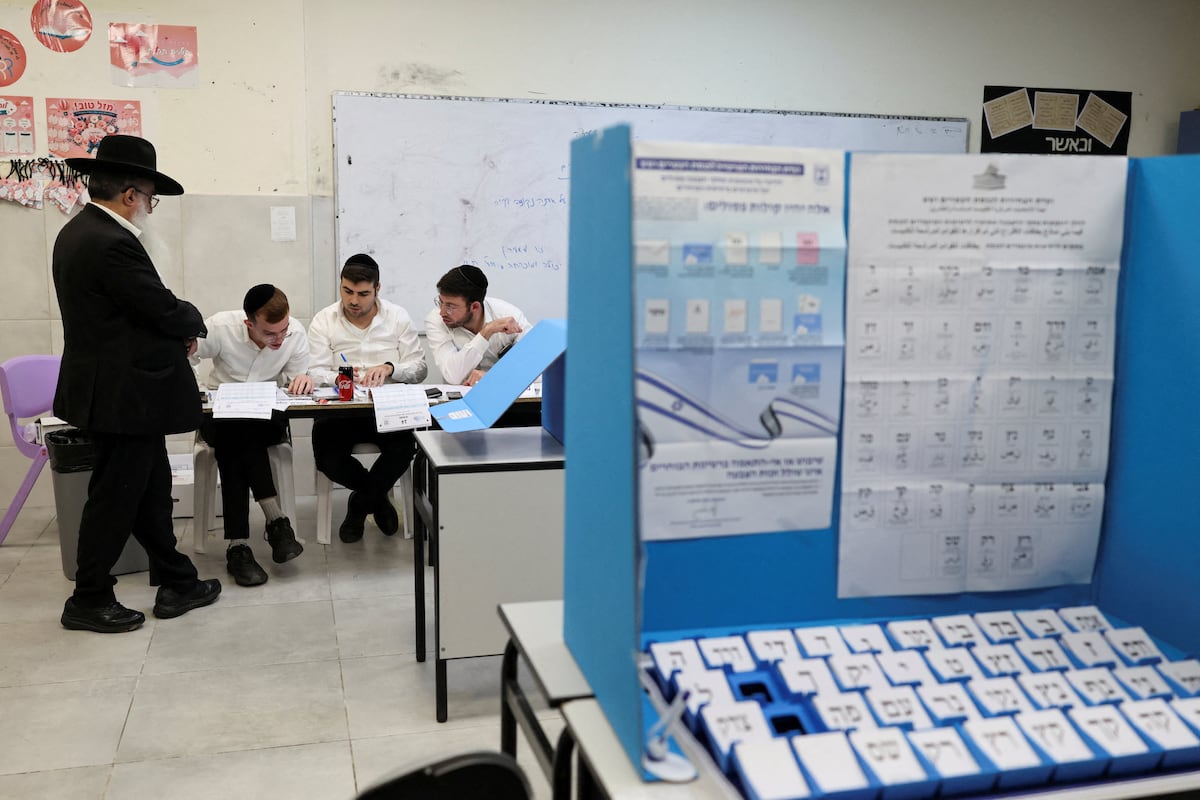
Voter turnout in Israel's parliamentary elections reached 44.9% by 2pm local time on Tuesday, the Central Elections Committee announced, the highest figure recorded at that hour since 1973, according to EL PAÍS. More than 3.2 million Israelis had cast ballots by that point, also the largest early tally since 1973.
The figure is six percentage points above the comparable mark at the previous election in 2022. Roughly 7.3 million people are eligible to vote in Tuesday's contest, the first national ballot since the attacks of 7 October 2023, in which about 1,200 Israelis were killed and 251 taken hostage.
Why it matters
The unusually heavy early turnout suggests an electorate mobilised by a campaign fought over the country's direction after nearly three years of war. Both the governing Likud party of Prime Minister Benjamin Netanyahu and the opposition have framed the vote in existential terms, and each side has spent the final day urging supporters not to stay home.
Turnout among soldiers was also running ahead of last time. The Israel Defense Forces reported that 48% of service members had voted by 1pm, compared with 44.4% at the same hour in 2022, according to EL PAÍS. Military voting opened on 21 October, with 850 polling stations set up on bases inside Israel and beyond its borders. The army said its aim was to let every member of the IDF exercise a secret ballot and that it would do what was needed for an orderly vote.
Netanyahu warns of Arab-led government as rivals press for change
Netanyahu, whose Likud party is seeking to rebuild the same governing formula with the religious supremacist right and ultra-Orthodox parties, used social media at midday to warn that a low turnout would hand power to Arab parties taking part in the election. "If we don't go out and vote now, we will find ourselves with a government of the Arab parties," he wrote, repeating a line of argument he has used in past campaigns, EL PAÍS reports.
Opposition leader Gadi Eisenkot took the opposite tack, telling Israelis that their ballots could deliver the change the country needs. "There are winds of change in Israel," he said, according to EL PAÍS.
Knife suspect detained at Tel Aviv campaign event
Israeli police detained a man on Tuesday who approached Yair Golan, leader of the centre-left opposition party The Democrats, carrying a concealed knife at a campaign event in Tel Aviv's Mesila Park.
In a statement quoted by EL PAÍS, police said officers escorting a public figure noticed a suspicious object protruding from beneath the coat of a man standing nearby. They stopped him for a check and found a knife. The suspect, a Jerusalem resident in his twenties, was taken to the Lev Tel Aviv police station for questioning.
The Democrats described the episode as an attempted stabbing and said the man had walked toward Golan in a threatening manner before bodyguards blocked him. Golan linked the incident to the prime minister, calling it "the direct result of the poisonous machinery operated by Netanyahu and his Qatari agents," according to EL PAÍS. The party later said it did not want to imagine how the incident might have ended without its own campaign, which it said had led the Shin Bet security service to take responsibility for Golan's protection.
West Bank sealed off as Hebron operation continues
More than half a million settlers living in West Bank settlements and East Jerusalem are eligible to vote in Tuesday's election. At the same time, Israel has kept the West Bank closed since Friday, when a Palestinian attack killed two Israeli soldiers and both assailants, who came from Hebron, EL PAÍS reports.
The roughly three million Palestinians in the West Bank have since faced sharply restricted movement between cities, and Israel ruled that most could not pass military checkpoints to reach jobs inside Israel on Tuesday for security reasons. In Hebron, a military operation launched on Friday to dismantle what the army calls terrorist structures is continuing.
The city council of Hebron, the most populous West Bank city with 250,000 residents, said Tuesday that 780 families — nearly 5,000 people — had been forced from their homes by soldiers searching house to house for suspects and weapons. Those displaced include 44 people with disabilities, 216 women who are pregnant or breastfeeding and 312 people with chronic illnesses, the council said, leaving them sleeping outdoors or dependent on the charity of friends and relatives.
What to watch
Attention now turns to the final hours of voting and the count, with the size of the turnout and the performance of the Arab parties that Netanyahu has warned against set to shape whether he can assemble another right-wing and ultra-Orthodox coalition or whether the opposition can form an alternative.